Sports Injuries
Shoulder Pain After Gym Workouts: Causes, Rehab and Safe Training
Why your shoulder hurts after the gym, how to tell soreness from injury, safer lifting, rehab phases and red flags.
By the physiotherapists at Spark Kinetics
·

Disclaimer: This article is general information, not medical advice. If you have shoulder pain, please get it assessed by a doctor or physiotherapist. If shoulder pain comes with chest pain, breathlessness or sweating, call emergency services straight away.
Quick Answer: Why Does My Shoulder Hurt After the Gym?
Shoulder pain after gym sessions is usually either normal muscle soreness or an overload problem in the tendons and joints. Soreness fades within days. Pain that is sharp, one-sided or getting worse needs a check.
Normal soreness: A broad ache that starts 12–24 hours after training, peaks around 24–72 hours and settles within about a week
Common causes: Rotator cuff related shoulder pain, AC joint irritation, instability and labral problems
Lifts that load the shoulder most: Behind-the-neck presses, upright rows, deep dips and wide-grip bench presses
What helps: Modifying (not stopping) training, then progressive strengthening with a physio
Get help if: Pain lasts over 2 weeks, follows an injury, or comes with numbness, deformity or chest symptoms
Is It Muscle Soreness or an Injury?
Muscle soreness feels like a dull, spread-out ache in the muscles you trained. An injury is more likely if the pain started suddenly during a lift, is sharp, sits in one spot, or keeps getting worse.
Shoulder pain after a workout is often just delayed onset muscle soreness (DOMS), which is common after new or harder exercise. Research describes a pain-free gap of about 12–24 hours, with soreness peaking around 24–72 hours and easing within 5–7 days.
Normal soreness usually:
Feels achy or tender across the muscle
Is worse when you first move and eases as you warm up
Gets a little better each day
Banner Health lists signs that point more towards an injury:
Pain that started suddenly during exercise
Sharp or stabbing pain
Pain focused in one spot
Pain that worsens instead of improving, or lasts longer than a week
Swelling, bruising, redness or weakness
If your shoulder pain fits the second list, stop the aggravating exercise and get it checked.
What Are the Common Causes of Shoulder Pain After Lifting?
The most common cause of shoulder pain after lifting is overload of the rotator cuff tendons. Other causes include AC joint problems, shoulder instability and labral tears.
Rotator Cuff Related Shoulder Pain (Subacromial Pain)
The rotator cuff is a group of four muscles and tendons that steady and move your shoulder. When they are loaded more than they can handle, they can become painful.
You may hear several names for this:
Rotator cuff tendinopathy
Subacromial pain syndrome (SAPS)
Rotator cuff related shoulder pain (RCRSP)
Impingement
A note on "impingement": Many experts now prefer terms like "subacromial pain" or "rotator cuff related shoulder pain". A BJSM review found impingement-based terms are used less in research than before. A Dutch Orthopaedic Association guideline says the idea of tendons simply getting "pinched" does not fully explain the condition.
A JOSPT review notes a change in load is thought to be the main factor linked to its onset. In the gym, that could mean a sudden jump in weight, volume or overhead work.
It often causes pain when lifting your arm, reaching overhead or lying on that side. An NHS trust leaflet says about 80% of people improve without surgery.
AC Joint Problems and "Weightlifter's Shoulder"
The AC (acromioclavicular) joint sits on top of your shoulder, where the collarbone meets the shoulder blade. The NHS lists pain on top of the shoulder as a sign of a possible AC joint problem.
One gym-specific condition is distal clavicular osteolysis, sometimes called weightlifter's shoulder. It is an overuse injury at the end of the collarbone. StatPearls notes bench pressing and overhead lifting are among the most common aggravating activities.
Shoulder Instability and Labral Tears
The labrum is a rim of cartilage that deepens the shoulder socket. A tear here can cause deep pain and odd mechanical sensations.
AAOS lists symptoms of a SLAP (labral) tear as:
Locking, popping, catching or grinding
Pain with lifting, especially overhead
Reduced strength and range of motion
A feeling that the shoulder might "pop out of joint"
The NHS also links tingling, numbness, weakness and a clicking or locking feeling to shoulder instability.
Pain From Somewhere Else
Not all shoulder pain starts in the shoulder. MedlinePlus explains pain can be "referred" from the neck or other areas. Referred pain is often present at rest and does not get worse when you move the shoulder.
Desk work can play a part too.
Which Gym Exercises Are Hardest on the Shoulders?
Lifts that combine heavy load with the arm raised, turned out or pulled far back put the most stress on the shoulder. That does not make them banned, but they need good form and sensible progression.
A paper in Clinics in Shoulder and Elbow on weightlifters' shoulders named these as higher-risk:
Behind-the-neck presses: Described as a high-risk training position
Upright rows, military presses and pec deck: Linked to rotator cuff problems
Bench press: Also described as high risk, especially with poor technique
The same paper also mentions AC joint separation, pectoralis major rupture and triceps rupture as possible weightlifting injuries.
StatPearls notes dips and push-ups can aggravate AC joint pain, so they may need to be modified while you recover.
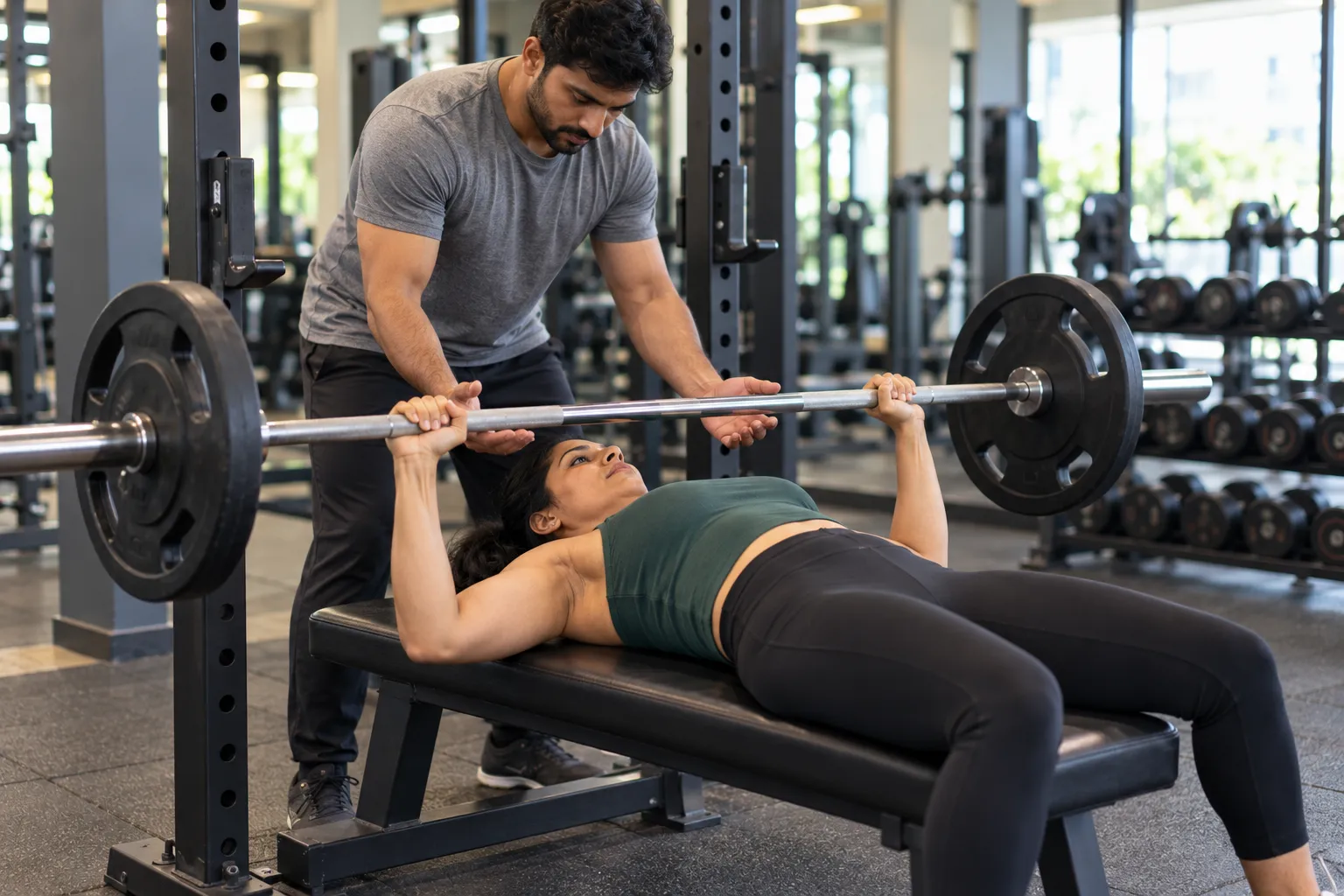
Safer Bench Press Form
A 2024 biomechanics study in Frontiers in Physiology tested bench press variations in experienced lifters. It found:
A grip narrower than 1.5 times shoulder width reduced compression at the AC joint
Pulling the shoulder blades back (scapular retraction) reduced shear forces and rotator cuff activity
How each lifter pushed sideways on the bar changed shoulder loads a lot
This was a small lab study of 10 lifters, so it shows lower loads rather than proven injury prevention. Still, it is a useful starting point to discuss with a coach.
What Should You Do First If Your Shoulder Hurts?
Reduce or change the exercises that flare your shoulder, but keep moving. Complete rest and immobilisation are generally not recommended.
The Dutch SAPS guideline advises relative rest in the early phase, then gradually expanding activity. It says movement within the pain threshold is desirable, and strict immobilisation is not recommended.
Practical steps:
Swap or pause the lifts that clearly trigger pain
Keep training the rest of your body
Lower the weight, range or volume for shoulder work
Ask a pharmacist about suitable pain relief; the NHS says they may suggest painkillers, gels, or heat and cold packs
Do not push through sharp pain. Do not self-diagnose either. The NHS advises seeing a GP if you are worried.
Keeping your lower body strong also helps you stay active while your shoulder recovers. If your knees give you trouble too, try these knee pain exercises for strength and mobility.
How Does Physiotherapy Rehab Shoulder Pain From the Gym?
Physiotherapy for gym-related shoulder pain is built on progressive exercise. It usually moves from calming symptoms, to rebuilding strength, to returning to full lifting.
A JOSPT review of systematic reviews made a strong recommendation for exercise therapy for subacromial shoulder pain. Helpful types included:
Scapular (shoulder blade) stability exercises
Rotator cuff strengthening
Shoulder flexibility exercises
The same review reported that, for persistent cases, progressive strengthening led to similar long-term outcomes to decompression surgery. A scapula-focused approach may offer extra short-term benefit.
There is no single official set of phases, but rehab often follows this pattern.
Phase 1: Settle Symptoms
Modify painful lifts and keep the shoulder moving gently
Learn about the problem and what to expect
Start easy exercises the shoulder tolerates, such as isometric holds
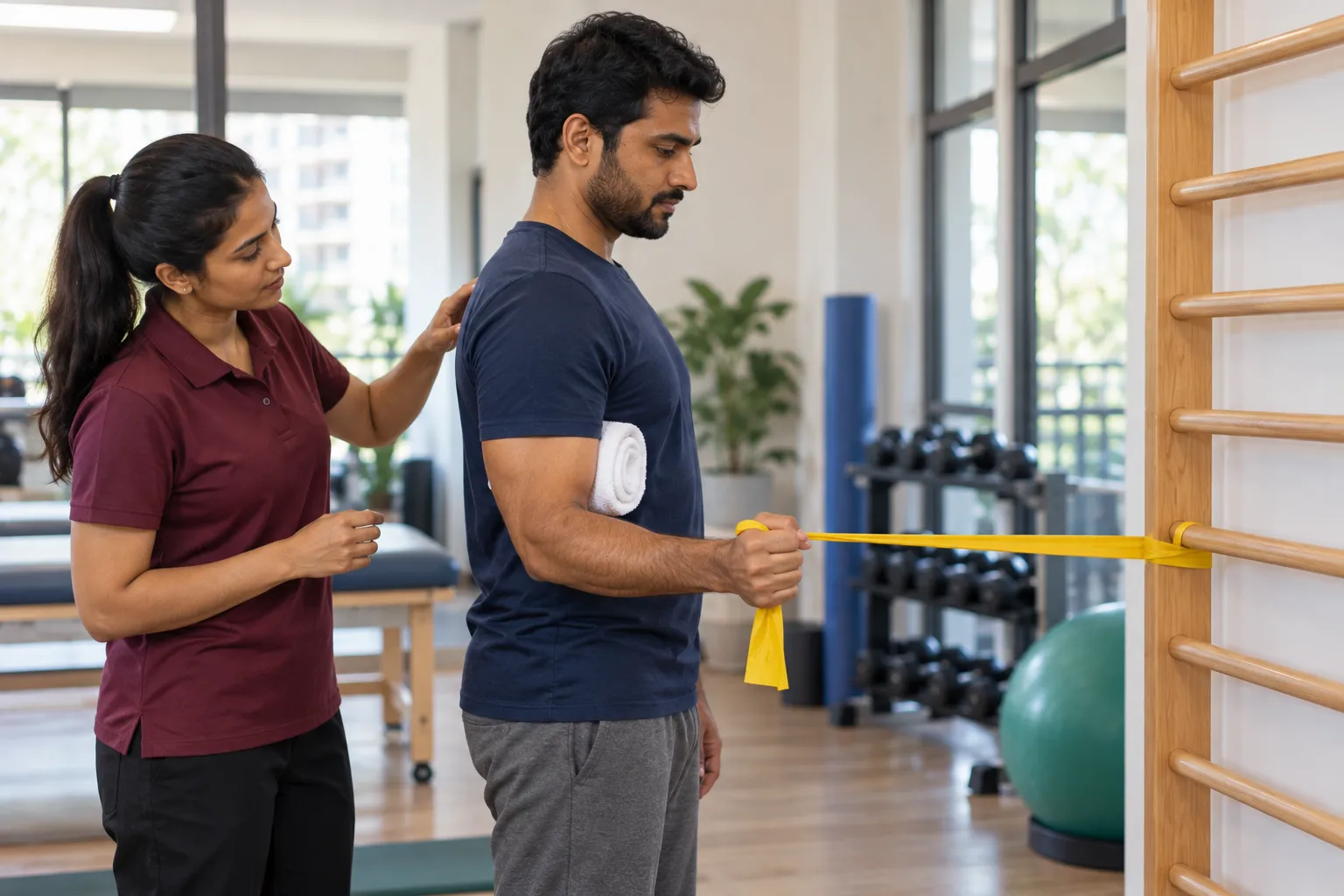
Phase 2: Rebuild Strength and Control
Progressive rotator cuff work, like band external rotation
Shoulder blade exercises, such as rows with good control
Gradually increase load and range as symptoms allow
The Dutch guideline suggests exercise at low intensity and high frequency, within the pain threshold.
Phase 3: Return to Lifting
Reintroduce gym movements with lighter weights and controlled range
Build up volume and load in small steps
Address technique, like grip width and shoulder blade position
Your physio will tailor this to your shoulder, your lifts and your goals.
How Do You Manage Training Load to Prevent Shoulder Pain?
Avoid sudden jumps in weight, volume or frequency, especially for pressing and overhead work. Since a change in load is thought to be the main trigger, gradual progression is your best protection.
Simple habits to prevent shoulder pain after gym sessions:
Increase weight or sets gradually, not all at once
Balance pushing with pulling work
Include rotator cuff and shoulder blade exercises in your plan
Spread heavy pressing across the week
Track which sessions leave your shoulder sore the next day
Prioritise sleep and recovery; an NHS trust lists stress, anxiety and poor sleep as possible contributing factors
When Can You Return to Lifting?
Return to heavier lifting when your shoulder handles lighter versions without pain getting worse, and your strength and range of motion are close to the other side. There is no fixed timeline.
There is no universal return-to-lifting test for the shoulder in the sources reviewed. Most physios guide it by:
How the shoulder feels during and after training
Strength compared with the other arm
Full, comfortable range of motion
Confidence with the movement
Build back slowly. Start with lighter loads and the variations your shoulder tolerates best.
Red Flags: When to See a Doctor About Shoulder Pain
Some shoulder pain needs urgent attention. Seek help quickly if you have signs of a heart problem, a serious injury or an infection.
Call emergency services immediately if shoulder or arm pain comes with:
Chest pain, pressure or a squeezing feeling
Pain spreading to your arm, neck or jaw
Shortness of breath, sweating, feeling sick or light-headed
The NHS and MedlinePlus both warn that these can be signs of a heart attack. Sudden left shoulder pain with pressure can be one sign.
Get urgent medical advice if:
You have sudden or very bad shoulder pain
You cannot move your arm
Your shoulder has changed shape or is badly swollen
You have pins and needles that do not go away, or no feeling in the arm
Your arm or shoulder is hot or cold to touch
The pain started after an injury or a fall
You have severe pain in both shoulders
You feel feverish or unwell
See a GP if shoulder pain is getting worse, does not improve after 2 weeks, or it is very hard to move your arm.
Getting Help for Shoulder Pain in Bangalore and India
A qualified physiotherapist can assess your shoulder, find the likely cause and design a rehab plan around your training. Look for one with sports or musculoskeletal experience.
If you live in Bangalore or anywhere in India, search for a physiotherapist near you and ask about their experience with gym and lifting injuries. Bring details of your training programme to your first visit, as it helps the physio spot load spikes.
Frequently Asked Questions
Is it normal for my shoulder to hurt after a workout?
Mild, achy soreness that eases within a few days is common. Sharp, one-sided or worsening shoulder pain is not, and should be checked.
Should I keep working out with shoulder pain?
Usually you can train other areas and modify shoulder work. Avoid lifts that cause sharp pain, and get advice from a physio.
How long does shoulder pain from the gym take to heal?
It varies with the cause. Soreness settles within about a week. Tendon problems often take weeks of progressive rehab.
Is "impingement" still the right word?
Many experts now prefer "subacromial pain" or "rotator cuff related shoulder pain", because "pinching" does not fully explain it.
Which exercises should I avoid with shoulder pain?
Behind-the-neck presses, upright rows, deep dips and wide-grip bench presses are often modified. A physio can tell you what suits you.
Do I need a scan for gym shoulder pain?
Not always. A doctor or physio will decide based on your examination and how you respond to treatment.
Can shoulder pain be a sign of a heart attack?
Yes, sometimes. If it comes with chest pressure, breathlessness or sweating, call emergency services straight away.
Will I need surgery?
Most gym shoulder pain is managed with exercise. An NHS trust leaflet says about 80% of people with rotator cuff related pain improve without surgery.
Book a physiotherapy session at Spark Kinetics
One-on-one physiotherapy in B Narayanapura, Mahadevapura. Call or WhatsApp us to book your assessment.
Book a consultation

